


Cold Brew vs Iced Coffee: What’s the Actual Difference (and Which One Should You Drink)?
If you’ve ever stood at a café menu wondering whether to order a cold brew or an iced coffee — you’re not alone. They both arrive cold, caffeinated, and refreshing. But the difference between cold brew vs iced coffee is much bigger than temperature alone.
The brewing method completely changes the flavor, caffeine level, acidity, and overall drinking experience.
Here’s the real breakdown — no coffee snobbery, just practical answers.
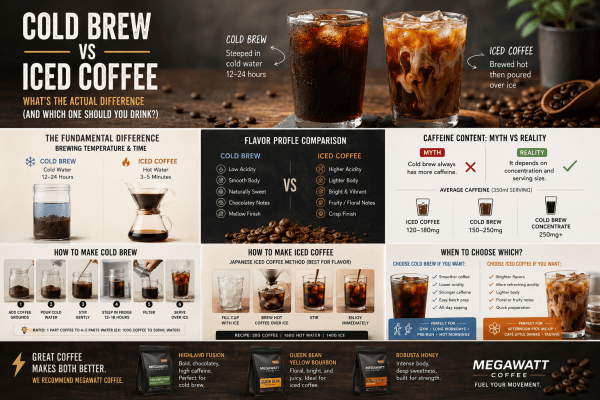
The Fundamental Difference: Brewing Temperature & Time
The biggest difference between cold brew and iced coffee is how the coffee is extracted.
Cold Brew
Cold brew is made by steeping coffee grounds in cold water for a long period — usually 12 to 24 hours.
Because there’s no heat involved, the extraction happens slowly and gently.
Result:
- Lower acidity
- Smoother body
- Naturally sweeter flavor
- Less bitterness
Iced Coffee
Iced coffee is simply hot coffee cooled down over ice.
It’s usually brewed using:
- drip coffee
- pour over
- espresso
- AeroPress
Then poured directly over ice or chilled afterward.
Result:
- Brighter flavor
- More acidity
- Sharper, more aromatic notes
- Lighter mouthfeel
Think of it this way:
- Cold brew = slow-cooked coffee
- Iced coffee = regular coffee served cold
Flavor Profile Comparison
Cold Brew Flavor
Cold brew tends to taste:
- chocolatey
- smooth
- mellow
- low-acid
- slightly sweet
It highlights deeper flavor notes and reduces sharpness.
With a bold blend like Megawatt’s Highland Fusion, cold brew brings out:
- dark chocolate
- roasted nuts
- brown sugar sweetness
- heavy body
It’s especially good for people who:
- dislike sour coffee
- want a smoother caffeine hit
- drink black coffee
- need all-day sipping fuel
Iced Coffee Flavor
Iced coffee keeps more of the original brewed character.
That means:
- brighter acidity
- more fruit notes
- sharper finish
- more aroma
Using a lighter roast like Megawatt Queen Bean can create:
- floral notes
- berry sweetness
- jasmine aroma
- refreshing citrus finish
Iced coffee feels more vibrant and refreshing — especially in hot weather.
Cold Brew vs Iced Coffee: Which Has More Caffeine?
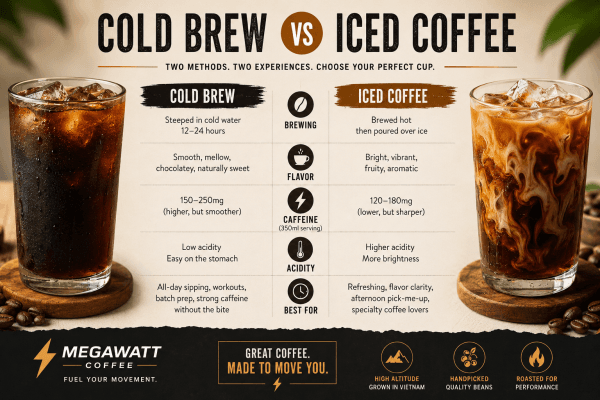
This is where most people get confused.
Myth:
“Cold brew always has more caffeine.”
Reality:
It depends on concentration and serving size.
Here are the average numbers:
| Drink | Average Caffeine |
|---|---|
| Iced Coffee (350ml) | 120–180mg |
| Cold Brew (350ml) | 150–250mg |
| Cold Brew Concentrate | 250mg+ |
Cold brew often tastes less strong because it’s smoother and less bitter — but it can contain significantly more caffeine.
That’s why many runners, cyclists, and endurance athletes love it:
- longer-lasting energy
- smoother stimulation
- less acidic stomach impact
For high-performance mornings, cold brew is basically liquid endurance fuel.
When Should You Choose Cold Brew?
Choose Cold Brew If You Want:
- smoother coffee
- lower acidity
- stronger caffeine
- easy batch prep
- all-day sipping coffee
- a creamy texture without milk
Cold brew is perfect for:
- gym sessions
- long workdays
- pre-run caffeine
- hot humid mornings in Hanoi
- people sensitive to acidic coffee
Megawatt Highland Fusion works especially well because the Robusta component adds:
- body
- crema-like texture
- strong caffeine kick
When Should You Choose Iced Coffee?
Choose Iced Coffee If You Want:
- brighter flavors
- more refreshing acidity
- lighter body
- floral or fruity tasting notes
- quick preparation
Iced coffee is ideal for:
- afternoon refreshment
- café-style drinks
- experimenting with pour over
- specialty coffee tasting
If you enjoy complexity and aroma, iced coffee usually gives more clarity.
Megawatt Queen Bean shines here because the Yellow Bourbon varietal delivers delicate floral sweetness even when chilled.
How to Make Cold Brew at Home
What You Need
- Coarse ground coffee
- Cold water
- Large jar or French press
- Filter
Basic Ratio
Use:
- 1 part coffee
- 4–5 parts water
Example:
- 100g coffee
- 500ml water
Steps
- Add coffee grounds to container
- Pour cold water over grounds
- Stir gently
- Let steep 12–18 hours in fridge
- Filter
- Serve over ice
Best Megawatt Beans for Cold Brew
- Highland Fusion → bold, chocolatey, high caffeine
- Robusta Honey → intense body and deep sweetness
Cold brew keeps well in the fridge for 3–5 days.
How to Make Iced Coffee at Home
Method 1: Japanese Iced Coffee (Best Method)
This method preserves aroma while instantly chilling the coffee.
What You Need
- Pour over dripper
- Ice
- Medium ground coffee
Recipe
- 20g coffee
- 160g hot water
- 140g ice
Steps
- Fill cup with ice
- Brew directly over ice
- Stir
- Drink immediately
Best Megawatt Beans for Iced Coffee
- Queen Bean Yellow Bourbon
- Ethiopia Sidama
- Light-medium roasts
This method keeps the coffee vibrant, juicy, and aromatic.
So which one is better?
Honestly — neither. They’re just different tools for different moods.
Choose Cold Brew:
- for smoother energy
- higher caffeine
- low acidity
- performance-focused mornings
Choose Iced Coffee:
- for flavor clarity
- refreshing acidity
- fruity/floral notes
- quick brewing
At Megawatt Coffee, we love both.
Cold brew fuels movement.
Iced coffee celebrates flavor.
And with high-altitude Vietnamese beans, both can taste incredible.
Brew Better with Megawatt Coffee
Explore:
- Highland Fusion
- Queen Bean Yellow Bourbon
- Robusta Honey
- Specialty Vietnamese coffee built for movement
Fuel Your Movement. ⚡☕